From a moving square to a commercial hit: the game design, AI-assisted development, and market growth behind Slotbound.
Copies sold in three days
One developer's journey into the games business
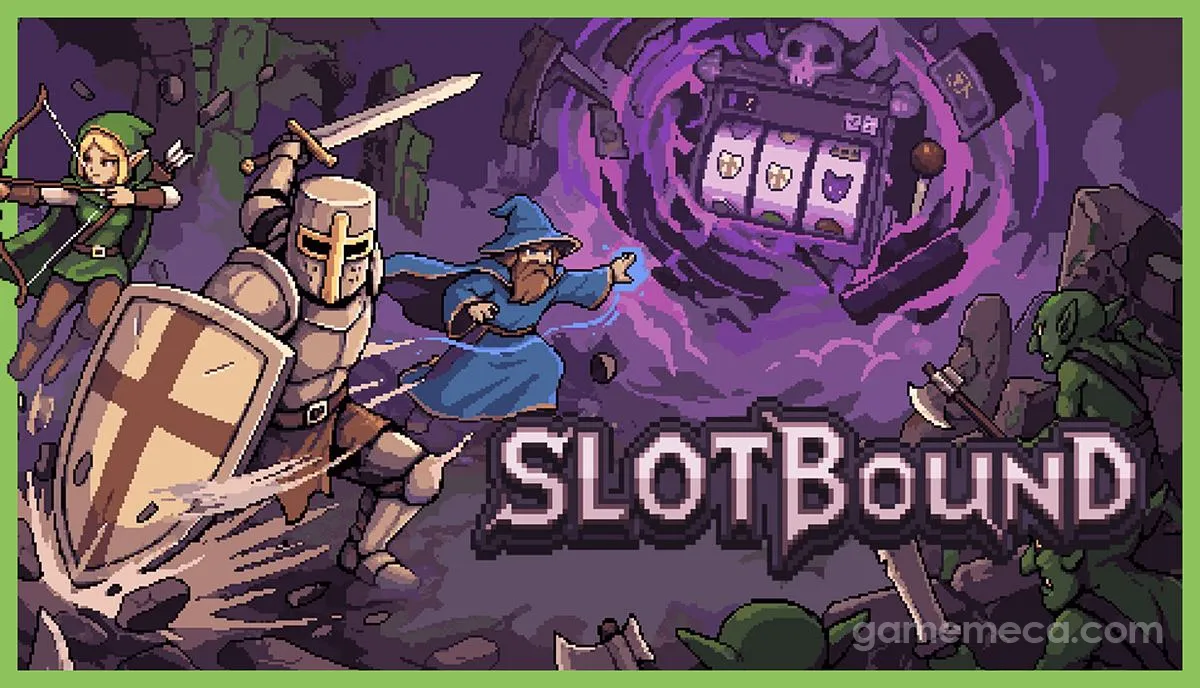
Source: Optima Arch / Gamemeca · Original source ↗
Contents · 5 research areas / 10 chapters
In 2025, a family member introduced South Korean developer Optima Arch to the idea of making games with AI. Unsure where to begin, he asked AI to create a square he could move with the WASD keys. When the square on his screen actually responded to his commands, he decided to try making a game of his own.
A little over a year later, his first game, Slotbound, launched on Steam. It sold 50,000 copies and generated $356,000 in gross sales in its first 48 hours. By day three, sales had passed 100,000 copies. Just a few months earlier, he would have been thrilled to see ten people playing his demo at the same time.
What's particularly striking is that, by his own account, Optima Arch had studied computer science in the UK but couldn't write code independently or produce professional game art. With AI and purchased assets, he managed to finish his first commercial game. It's tempting to see this as another entrepreneurial breakthrough made possible by AI. Yet as more people gain the ability to make games with AI, very few are selling 100,000 copies.
What, then, did Optima Arch get right that others haven't?
Making a game is only one part of building a successful indie game business. From the initial idea to launch and beyond, developers need to find a market opportunity worth pursuing, design a game people want to play, build and refine it with limited resources, reach potential players, and ultimately turn that interest into sales.
With that in mind, we'll examine Slotbound from five angles: market opportunity and product positioning, game design and player experience, development and iteration, distribution and audience growth, and commercial viability and sustainability.
To find out, we looked through more than a year of Optima Arch's development logs, patch notes, player comments, comparable games, and records of the game's early exposure. Rather than simply recounting what he did, we wanted to understand what problems his decisions addressed, what outcomes followed, and what other indie developers can learn from his experience.
Source: Optima Arch · Original on YouTube ↗
Where did he see a market opportunity?
CloverPit launched on September 26, 2025. Set in an unsettling world of slot machines and mounting debt, the game asks players to spin the reels and combine items to earn enough money to pay what they owe. According to announcements from its developers, it sold 300,000 copies in four days and reached 750,000 within two weeks.
Optima Arch was among its players. The idea for Slotbound came to him while playing CloverPit: watching three matching symbols line up on the reels, he wondered what would happen if three spears lined up and, instead of coins, he got a squad of spearmen fighting on his behalf.
He assumed someone must have made that game already. But when he looked, most of the similar games he found used slots for one-on-one combat or bonuses to stats such as attack and defense. What he really wanted was a game where a slot machine would build his army. Around October 2025, he started developing Slotbound.
Finding a fresh opportunity in a familiar mechanic
CloverPit wasn't the first game to combine slot machines with strategy. Other developers had already explored how to turn an activity based on chance into one that rewards careful decisions.
| Game | What random rewards do | What players aim for |
|---|---|---|
| Luck be a Landlord | Combine symbols and earn coins | Build a reliable source of income |
| Spin Hero | Trigger attacks, defense, and other effects | Strengthen a character and defeat enemies |
| CloverPit | Earn coins and special rewards | Pay off debt and survive |
| Slotbound | Summon combat units directly | Build an army and win battles |
All four games preserve the excitement of an unpredictable reward, but put that reward to different uses. What's interesting about Slotbound is how it turns an abstract numerical reward into a unit you can actually see on the battlefield. Get a powerful character and you can watch it defeat enemies. Put together a large army and you can see the cumulative results of your decisions.
That makes the game easier to understand as well as more varied to play. Even viewers who don't know how much attack power a particular unit has can tell that a player is getting stronger by watching the army grow and seeing how battles play out. That clarity may also have helped the game spread.
Still, CloverPit's success only established the commercial potential of related mechanics. It didn't prove that players wanted a game about building armies with a slot machine. That demand still had to be tested. Optima Arch took a familiar mechanic, reducing the risk of exploring something entirely unfamiliar, and gave its rewards a new purpose that distinguished his game.
Why was this a good fit for a solo developer?
Had he chosen to make a story-driven adventure, he might have needed a steady supply of new maps, characters, animations, and narrative sequences. Once players finished one section, he'd have to make the next. Slotbound, by contrast, can create new experiences from the same set of rules as players mix and match units, items, and abilities.
New maps and stories
New experiences usually require new content
Same rules, different strategies
More time for balancing and testing
Imagine a game with 20 combat units and 20 special abilities. Even if you only consider pairings of one unit and one ability, there are 400 possible combinations. Each new ability could introduce new uses for existing units. Of course, not every combination will be fun: the developer still has to deal with overpowered characters, useless items, and conflicting abilities. But instead of constantly building new maps, more of that time can go toward improving the existing mechanics.
This doesn't eliminate the cost of making content. It lets the developer get more mileage out of what has already been made. Once players have explored most of the viable strategies, new content may still be necessary to keep things fresh. By also opting for 2D pixel art, purchased character assets, single-player gameplay, and automatic combat, Slotbound avoids expensive undertakings such as open worlds and large-scale multiplayer networking.
Optima Arch may not have approached the project with a detailed commercial plan. By his account, he simply wanted to make a game he would enjoy playing. But the idea offered both a market opportunity worth exploring and a scope that one person could realistically take on.A good game idea needs an audience, but it also needs to fit your available time, budget, and skills.
Choosing the right project gave him a realistic chance of finishing it. Getting people to play it repeatedly, however, meant addressing an inherent problem with slot machines as a game mechanic.
How do you make luck fun without letting it dictate the outcome?
The basics of Slotbound are straightforward. Players spin a 3×3 slot machine to summon units from matching symbols, then use those units to defend against waves of enemies. Gold, items, special abilities, and unit stats all influence how an army develops.
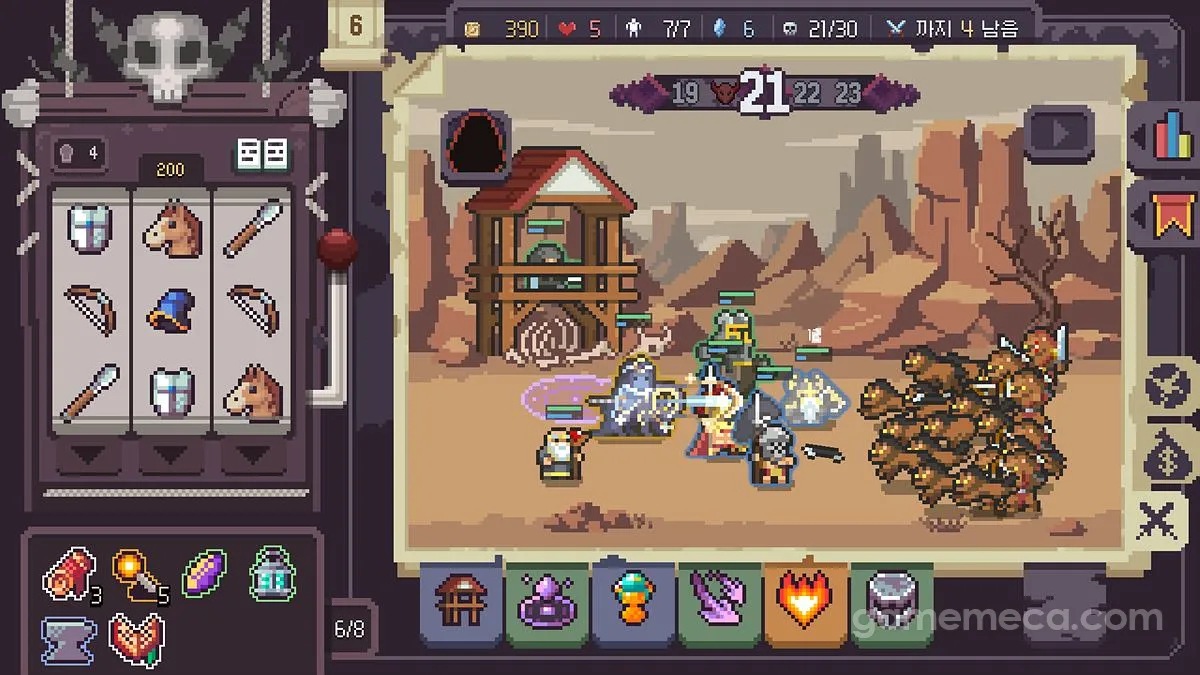
Source: Optima Arch / Gamemeca · Original source ↗
Slot machines present a natural design problem. If players can only accept whatever the reels give them, the fun can quickly devolve into waiting for good luck. But if they can control every outcome, the slot machine loses its appeal. Slotbound's approach is to make random outcomes resources that players can work with, rather than letting those outcomes determine victory or defeat outright.
Give unwanted rewards a purpose
Say you're trying to build an army of archers, but keep drawing melee units. In a game with no way to repurpose resources, those units might be useless to your plan, and the gold spent getting them would effectively be wasted. Slotbound offers an absorption mechanic: unwanted units can strengthen other characters, or you can change the direction of your army to make use of what you've got.
Players don't need every roll to go according to plan. Two people can get the same result and put it to very different uses. One early demo reviewer illustrates this well. He intended to give the game a quick try and ended up playing for more than two hours. After initially failing because he kept too many units, he discovered that concentrating resources on a few strong characters could work just as well. He eventually cleared the demo with a single high-level warrior.
That doesn't prove strategy can overcome every streak of bad luck. What it does show is how learning the game can bring new value to resources that previously seemed unimportant. Players may start another run not simply in the hope of better rolls, but to test a strategy they've just discovered. That pleasure of learning through experimentation is an important reason to keep coming back.
Getting the wrong unit isn’t the same as getting nothing
Clever as it is, absorption only addresses part of the problem. Drawing an unwanted unit still leaves you with a resource to use. Several spins without a unit, on the other hand, may consume gold without giving you anything to work with.
Draw an unwanted unit
Absorb, upgrade, or change strategy
Several spins without a unit
Explore guaranteed rewards or compensation
This matters especially early in a run, when both gold reserves and the army are small. A streak of bad luck can leave the army underpowered, making the next battle harder and putting further progress at risk. As these effects compound, even players with a sound strategy may find themselves without the resources to carry it out. This is one reason some players have criticized the higher difficulty levels.
Luck be a Landlord offers a useful point of comparison. Its reroll and symbol removal mechanics let players influence future outcomes, not just deal with the ones they've already received. The lesson is to think beyond the rewards generated by chance and consider how much damage a prolonged streak of bad luck can do.
For example, a game built around random summons could guarantee a reward after several unsuccessful attempts, refund some gold, or gradually increase the chance of the next successful roll. These are possible ways to prevent players from losing all control early in a run, not features that Slotbound has necessarily implemented.
If a run can’t be saved, the next one should benefit from it
After launch, the developer continued to adjust the relationship between randomness and progression. The November 16 update made the Core probability upgrade easier to unlock and introduced rewards for unsuccessful runs. Even if players failed to clear a stage, they could earn some progression currency based on the waves they had completed.
The two changes address different problems. Earlier access to Core probability upgrades gives players some influence over which special abilities appear, but that isn't the same as improving the odds of summoning units. Rewards for failed runs help players progress in their next attempt; they can't rescue a battle that's already been lost.
| Problem players face | Possible response |
|---|---|
| Drawing unwanted units | Absorb, upgrade, or change the lineup (existing mechanic) |
| Repeatedly drawing no units | Guaranteed rewards, compensation, or other recovery options (proposed) |
| Random abilities don't suit the current strategy | Let players influence which abilities appear |
| The run has already ended in defeat | Carry some progression rewards into the next attempt |
Slotbound's original absorption mechanic gave players a way to make use of random resources. Its post-launch adjustments further reduced some of the costs of failure. Whether the problem of repeatedly receiving no useful combat resources has been adequately addressed still needs to be tested through actual play.
Good randomness can disrupt a player's plans without taking away their ability to make plans at all. The aim is to preserve the excitement of chance while leaving players meaningful decisions when things don't go their way. Finding that balance clearly takes more than having AI write the code.
AI helped write the code. What took over a year?
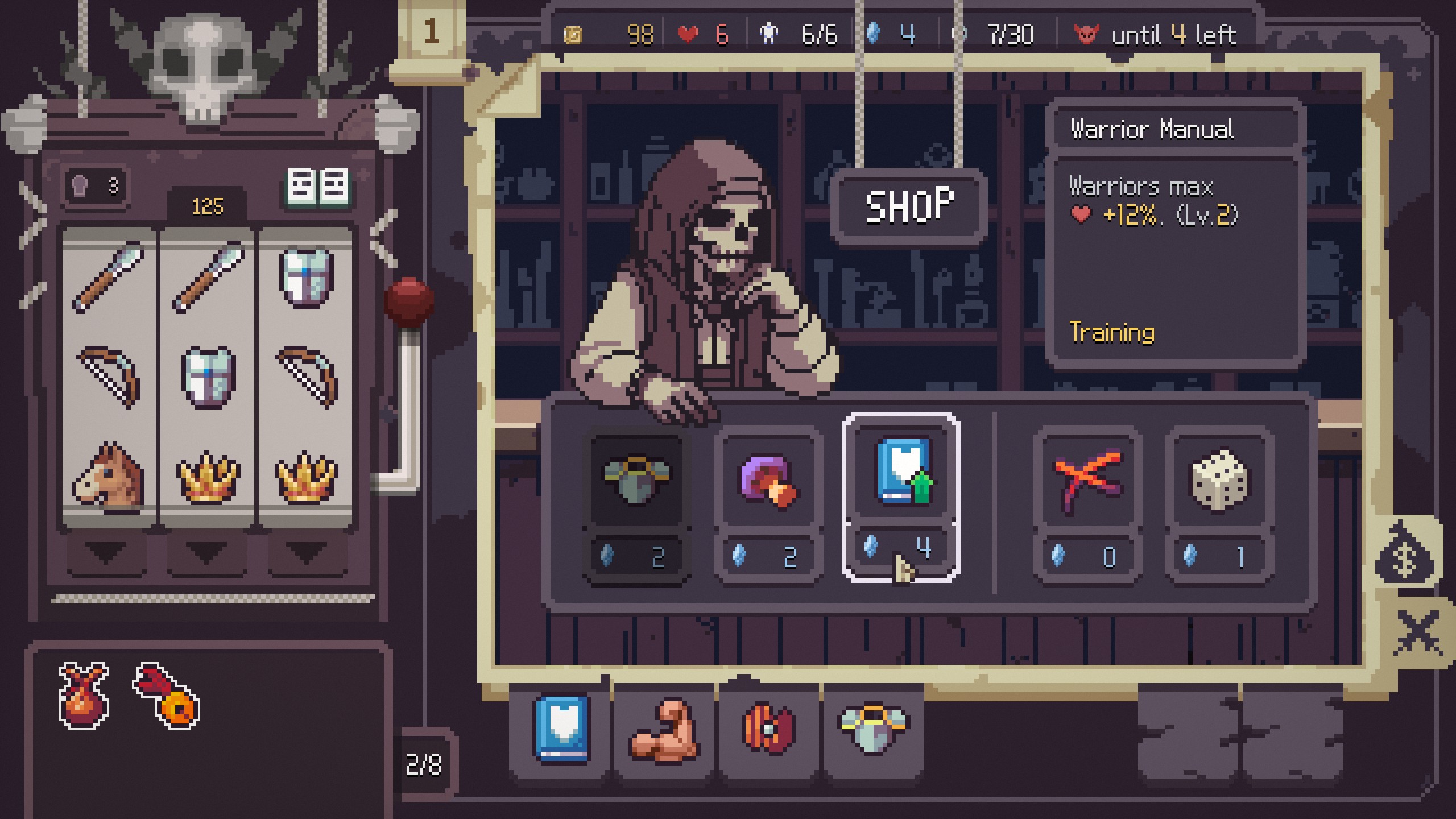
Source: Optima Arch · itch.io · Original source ↗
Optima Arch spent about eight months going from his first prototype to a public Steam demo, followed by several more months of refinement. According to his development records, he built the game with LÖVE, a framework for making 2D games, relying primarily on Codex to write code and other AI tools to discuss design or tackle specific problems. For the art, he used tools such as PixelLab to create some of the assets and bought ready-made character sprites.
He didn't insist on generating everything with AI. When suitable character assets already exist in a consistent style and format, buying them can be easier than repeatedly generating and revising them. His goal was to get assets that worked for the game, not to prove how much of it was made by AI.
His coding workflow was fairly straightforward. He asked AI to tackle one specific feature at a time, specified the files and constraints, and tested the result immediately. If something went wrong, he described where the error occurred, what should have happened, and which working features needed to remain untouched.
Early builds contained temporary interfaces, unexpected behavior, and systems that later had to be rebuilt. Without detailed time logs, we can't say exactly how those first eight months were spent. But the updates throughout development and launch show several kinds of work that fell to the developer beyond having AI write code.
Case 1: Why remove a feature that already works?
Early versions of Slotbound had a preparation timer before each wave. Players had a limited time to spin the reels, manage the units they summoned, and arrange their army. From a designer's perspective, the timer could add tension and keep the game moving. But first-time players had to read unit descriptions, understand item effects, and figure out how to position their army, all while the clock was ticking.
Experienced players might make a decision at a glance, while newcomers still needed to work out what their options were. On July 13, the developer removed the preparation timer altogether. That changed what the game was testing. For an experienced player, the timer might have been an extra challenge; for a newcomer, it mostly made learning the game harder.
Slotbound's appeal was supposed to come from managing resources and putting together an army, not from reading and clicking quickly. Removing the timer let players concentrate on strategy. There's a useful lesson here for indie developers: before adding difficulty, ask whether it tests a skill you actually want players to master. Otherwise, it may simply get in the way of the fun.
Case 2: Why don’t more features necessarily make a game better?
On July 1, Optima Arch reworked the Core system. Just three weeks later, version 0.3.0 rebuilt it almost from scratch. Cores are special abilities that can shape how a player approaches an entire run. The developer wanted different Cores to steer armies in noticeably different directions, rather than simply offer additional stat bonuses.
The issue persisted in later player feedback. Some players felt that certain Cores overlapped with shop items, while others had complicated activation conditions that required a lot of reading. Complex rules can create interesting strategy, but if all that reading ultimately comes down to working out which option deals more damage, the extra complexity may not be worth it.
Attack +10% / +12%
All else being equal, pick the bigger number
Large army vs. elite force
Changes how you allocate resources
With all other conditions equal, choosing between a 10% and a 12% attack bonus is usually straightforward. Choosing between raising a large army and investing in a handful of elite units, however, changes how you allocate resources for the rest of the run.
That's why a game with 100 pieces of equipment and 50 special abilities isn't necessarily more fun than one with just 20 pieces of equipment. If most options amount to different stat bonuses, there aren't nearly as many distinct ways to play as the numbers suggest. The July 23 overhaul of the Core system was an attempt to make those choices more consequential. When AI makes adding features easier, the more important question is what new experience each feature actually brings.
Case 3: When can extra rewards make a game worse?
The November 16 post-launch update contained another easily overlooked change: some progression tasks were replaced. Previous tasks had asked players to limit their spins, avoid absorbing units, restrict the size of their army, or use characters from a specific faction.
Those restrictions might sound like interesting challenges, but they can work against the very thing that makes the game fun. Slotbound encourages players to adapt their strategy to the resources they receive. If progression rewards require a particular lineup, however, players might draw units that are ideal for a different approach and still feel obliged to pass up the better option to complete the task.
As an optional challenge a player chooses to take on, such restrictions can be entertaining. As a necessary route to important progression rewards, they can make players sacrifice an enjoyable run for the sake of a reward. The update replaced some tasks that forced particular playstyles and tried to avoid offering tasks that were impractical given the player's current army. The issue wasn't simply a lack of rewards; it was a conflict between the behavior those rewards encouraged and the core gameplay.
This change came after the game's commercial breakthrough, so it can't explain the earlier sales growth. It does, however, illustrate another kind of design problem the developer faced: a feature can work perfectly well in isolation and still interfere with the rest of the game.
AI may give developers more room to experiment
These three cases concern difficulty, strategic choice, and progression rewards, but they have one thing in common: working code doesn't mean a design works. In conventional development, rebuilding a feature that turns out to be disappointing costs extra time and money. With limited resources, developers sometimes feel compelled to keep an unsatisfactory feature because of the work they've already put into it.
AI gave Optima Arch the ability to implement designs he previously couldn't code on his own, and to keep revising them. We don't have enough data to measure how much time or money this approach saved him. What we can see is that he didn't treat the fact that a feature was already built as a reason to keep it.
For solo developers, AI may be valuable not only because it turns ideas into working products, but also because it makes previously impractical experiments possible. Developers still need to know when a design is wrong, though, and spending months alone with your own game makes it difficult to spot every problem. To get past that limitation, Optima Arch needed something else: real players.
How a free demo helps a solo developer see what they’re missing
By late June 2026, Slotbound was publicly playable on itch.io. Its free Steam demo arrived on July 10, when the game had just 590 wishlists. Those wishlists showed that some people were interested, but the developer still didn't know whether they would enjoy the game, understand its rules, or leave at the first sign of trouble. The demo changed that.
In the itch.io comments, one player described in detail how awkward it could be to upgrade a character. When units overlapped, he sometimes had to switch between dragging and absorption modes, separate the units, perform the upgrade, and reposition them for battle. From a programming perspective, all of those features could be working as intended. From the player's perspective, they meant repeatedly performing actions that had nothing to do with strategy. The larger the army, the more tedious that process could become.
The July 23 update introduced unit locking, improved unit spawn positions, and added shortcuts and mid-run saving. These changes addressed issues that corresponded with early player feedback.
The better you know your game, the easier it is to overlook a newcomer’s problems
Another piece of feedback relates to the rewards for failed runs discussed earlier. One player said it took three or four attempts to begin understanding the strategy, but his poor performance in those first runs left him with almost no permanent upgrades. He kept playing because he'd already found something he enjoyed. Other newcomers might have quit after repeated failures before discovering what made the game fun.
I think I was balancing it too much from my own perspective after already knowing the game.
— Optima Arch · itch.io community discussion
Optima Arch acknowledged that he might have been balancing the game from the perspective of someone who already knew it well. This reveals two different kinds of progress. A player was learning the rules and becoming better at making decisions, but the game's rewards weren't reflecting that progress. To the developer, the player simply needed a few more attempts. To the player, several consecutive runs might feel like a complete waste of time.
That's why the later introduction of rewards for failed runs mattered. It couldn't reverse a defeat, but it could give players a tangible sense of progress as they learned. Larger studios can have dedicated testers observe people playing a game for the first time. Optima Arch was both the designer and the game's long-time tester, making it easy to validate his own assumptions against his already-established understanding of the game.
The public demo helped break that cycle. New players could spot awkward controls he'd grown accustomed to, try strategies he hadn't anticipated, and point out rules that were difficult for newcomers to understand. Listening to players doesn't mean implementing every request, however. A request to remove a timer may really be about having too little time to understand the rules. A request for more rewards may point to a lack of feedback on the progress a player is already making.
The developer needs to understand why players are making those requests before deciding what to change. That kind of feedback is especially important for people making games with AI. AI can implement a design; real players can reveal which designs aren't worth pursuing. And the value of the public demo didn't stop at improving the game. As more strangers got their hands on Slotbound, its growth began to change as well.
From 590 to 100,000 wishlists: why the first 72 hours mattered
Slotbound's wishlists took off after the Steam demo launched. They passed 50,000 within 17 days, 70,000 in about a month, and 100,000 by the end of September. Looking only at the final figure, it's easy to say the demo went viral. But going viral is an outcome, not an explanation. To understand how a little-known game started attracting attention outside its existing audience, we need to go back to its first few days in the market.
590 → 100,000+
Wishlist growth after the demo launch
What happened in those first 72 hours?
On July 11, Optima Arch shared the demo's first-day figures on Reddit.
A median playtime of 39 minutes means roughly half the demo players spent at least 39 minutes with the game. Without benchmarks from comparable demos, we can't say how impressive that figure was. But unlike a store-page visit or a wishlist, it reflects time people actually spent playing.
In public discussions around that time, Optima Arch said he had posted about the game on social platforms such as Reddit and emailed a small number of indie game YouTubers. Slotbound wasn't an overnight hit achieved without any marketing, purely on the strength of the game. He did promote it himself, albeit without a large personal following or an established publishing team behind a major campaign.
By the third day, wishlists were approaching 7,000 and concurrent players had reached about 1,000. People were also commenting on the developer's posts to tell him that YouTube creators were making videos about the game. A month later, with wishlists past 70,000, Optima Arch said that the creators who went on to play it had mostly discovered it on their own.
The public figures don't tell us exactly which channels brought in the first players. But these accounts reveal an important shift: at first, the developer had to introduce the game to people himself; later, other people were introducing it to their own audiences. We found one case that lets us look more closely at how that happened.
Why would creators choose to cover the game?
On July 11, the day after the Steam demo went live, YouTube creator Gohjoe posted a video about Slotbound.
Source: Gohjoe · Original on YouTube ↗
The title is about building an army of barbarian cannibals. More interesting than the video's view count is its choice of subject. Gohjoe wasn't pitching Slotbound as an AI-made game or merely explaining how its slots work. He was showing viewers how he built a particular kind of army.
For gaming creators, enjoying a game is only part of the equation. They also need a steady supply of ideas that will interest their audiences. Even a well-made game doesn't necessarily provide that. Slotbound has a potential advantage here: by combining units, items, and abilities differently within the same rules, different players can generate stories of their own.
The developer supplies the basic characters, items, and combat rules. Players use those ingredients to put together unusual lineups, create extraordinarily powerful warriors, or pull off unexpected victories. Gohjoe didn't need a bespoke barbarian army level to make a video with its own theme. Another creator could take the same game and try to win with one superpowered warrior or explore a completely different lineup.
The slot machine also offers an instantly understandable starting point. Viewers don't need to learn dozens of unit stats to share the anticipation of the next spin, watch an army take shape, and see how the final battle turns out. The design can serve both audiences: players get varied runs, while creators get a succession of different video ideas.
In the comments on the developer's early Reddit posts, we found players saying they had watched Gohjoe's video and added the game to their Steam wishlists. On itch.io, another player said they downloaded the game after seeing a Vietnamese YouTuber play it. These records don't establish that videos accounted for all of Slotbound's growth, but they do show that this route to discovery genuinely occurred.
When a game keeps generating stories worth sharing, its developer may become less reliant on direct marketing and paid promotion. In that sense, part of a game's potential to spread can be shaped during gameplay design itself. Yet a video bringing a game to someone's attention doesn't mean that person will become a player. Another important decision behind Slotbound was to let viewers try the game the moment it caught their interest.
How did Steam help more players discover the game?
Many indie developers assume that enough wishlists will automatically get Steam to recommend their game to more people. According to Steamworks documentation, however, outside a few placements such as Popular Upcoming, wishlist counts are generally not a factor in algorithmic visibility. Steam pays more attention to where players actually spend their time and money.
A wishlist, then, is different from someone downloading a game and actually playing it. Slotbound released a free demo with its own Steam store page. Besides giving players immediate access, a separate page lets the demo collect reviews of its own and potentially appear in Steam's new releases, popular titles, and category pages.
Imagine if Slotbound had only had a store page and a trailer. Someone watching Gohjoe's video could add the game to their wishlist, but would have to wait until launch to find out whether they enjoyed it. The free demo shortened that gap. People could try the game while their interest was at its peak and, if they liked it, recommend it to others or make their own videos.
As player numbers rose, the game also had opportunities to appear on rankings based on actual play, making it easier for others to discover. By early August, Slotbound had reached the upper end of the Steam demo concurrent-player rankings. By late September it had passed 100,000 wishlists, while Optima Arch was still preparing a new demo build for the upcoming Steam Next Fest. That particular major platform event wasn't a prerequisite for the first 100,000 wishlists.
Taken together, the public records suggest a plausible growth path. The developer's initial outreach helps the first players discover and try the game. Enjoyable gameplay attracts creators who make videos; those videos bring in more players, and growing player numbers create further opportunities for visibility on Steam.
Without a complete traffic breakdown from Steam, we can't establish how much each of those steps contributed or conclude that recommendations were the main driver. What we can confirm is that Slotbound attracted substantial actual play, third-party video coverage, and wishlist growth ahead of launch.
In that process, wishlists look more like accumulated market interest than the sole force driving growth. That helps explain how someone without a large personal following could reach an audience far beyond the size of his own social accounts. Rather than introduce the game to every prospective player himself, he made it something people could try, share, and discover through the platform.
When games become easier to copy, what can original creators rely on?
In September 2026, before Slotbound's official launch, Optima Arch discovered games on Chinese mini-game platforms that closely resembled his own. According to his interview with Gamemeca, one of them had already introduced a payment system. Another strikingly similar game later appeared on WeChat's mini-game platform.
It was an unusual position for a developer preparing to launch his first game: after investing so much time in making it, he hadn't yet started earning sales revenue, but suspected imitators were already trying to monetize similar products. Optima Arch believes AI may have been involved in recreating the games, although there is no independent technical evidence of how they were actually made.
The situation presents a striking contrast with his own experience. AI helped him overcome the technical barriers to making a game, yet similar tools could help others quickly imitate products that have already attracted market interest. If a game's basic rules, code, and interface become easier to reproduce, what advantage can the time spent developing the original still give its creator?
Copying a solution is easier than finding one
Slotbound didn't look the way it does today on its first day of development. It once had a preparation timer, went through several redesigns of its Core abilities, and saw changes to unit controls, early-game progression, and rewards. The version players see now is the result of extensive experimentation.
Someone coming along later can observe the current version and reproduce many of its established design decisions without going through all the failed attempts that preceded them. An imitator might notice that the current game has no preparation timer, for instance, without knowing that it once had one or understanding why it made the experience harder for newcomers.
The distinction matters more as a game continues to evolve. When players raise new issues, an ability upsets the game's balance, or existing strategies start to feel stale, the developer has to look for new answers. An imitator could certainly acquire that knowledge through their own research and testing, and might even make a better game. But reproducing the current version doesn't automatically give someone the ability to keep improving it.
What an original creator can build up, then, goes beyond code and art. It includes knowing what has been tried, why certain features were removed, and what players genuinely enjoy. That knowledge doesn't guarantee a lasting lead, but it can inform the next difficult design decision.
Unexpected help from Chinese players
During the incident, some Chinese players reached out to support Optima Arch. Language barriers and platform access made it difficult for him to deal with issues on mini-game platforms in other regions. Players contacted him directly, supplied information, and helped with the reporting process.
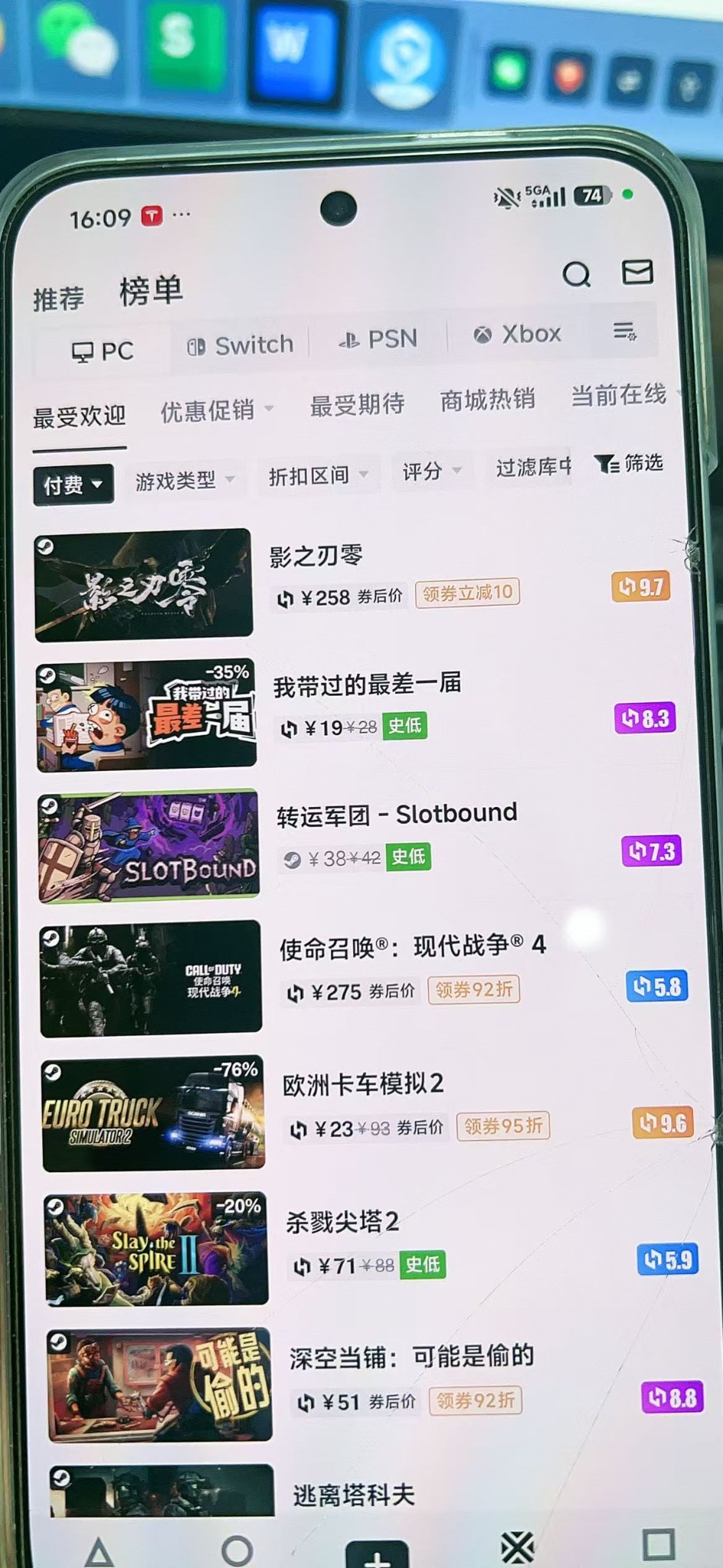
A major game company might have local staff or specialists handle such matters. For an independent developer, even finding out about suspected copies in another market can be difficult. These players helped fill a gap in what he could manage on his own.
This reveals a trade-off in releasing a free demo. It gives potential imitators early access to the game, but also gives the original creator time to establish recognition and trust with players. Both are possible consequences of going public. Keeping a game completely under wraps to prevent imitation could mean missing out on early feedback and exposure; releasing a demo means accepting the risk of showing the work before launch.
For developers with limited resources, a more practical approach may be to keep thorough development records, take basic steps to protect their rights, and establish an identifiable original game and official community early on. One reporting incident doesn't establish that Slotbound has a durable competitive advantage. It does provide a real example of how relationships with players can create value beyond sales, playtesting, and publicity. As the technical barriers to making games fall, the experience, knowledge, and relationships built along the way may become more valuable.
What did more than a year of work bring in?
Slotbound officially launched on Steam on November 12, 2026. Before that, the developer had also faced delays in the game's approval process. Despite submitting the game several weeks in advance, the review and resubmission process took longer than he expected.
The game makes money in a fairly simple way: players can try the demo for free and buy the full game with a one-time payment if they enjoy it. The standard US price was $9.99, with a launch discount bringing it to $8.99. After the first 48 hours, Optima Arch disclosed the following figures.
Those sales came after months of building market interest. For people who had tried and enjoyed the demo, buying the full version wasn't a gamble on a completely unfamiliar game. They were paying for something they already knew to some extent. That can reduce uncertainty about a game's quality and how it plays.
But 100,000 wishlists before launch and 100,000 copies sold in three days do not mean every person who wishlisted the game bought it. Sales may also include people who discovered it after launch through videos, rankings, or recommendations. Without the backend data, we can't tell how many purchases came from existing wishlists and how many from new interest.
What might he actually take home from 100,000 sales?
Optima Arch hasn't shared his full financial records, but his disclosed figures give us a starting point for an estimate. In the first 48 hours, Slotbound sold 50,000 copies and generated $356,000 in gross sales, or about $7.12 per copy. If that average held for the next 50,000 copies, gross sales for 100,000 copies would amount to roughly $712,000.
Not all of that money reaches the developer. Under Steam's payment rules, refunds, chargebacks, and applicable consumption taxes are deducted from gross sales before the contractual revenue split. Assuming those adjustments total 10% and Steam takes a 30% share, the developer's income before income tax would be around $449,000.
Approx. $270,000
Estimated after-tax income from 100,000 copies · illustrative scenario
If Optima Arch is a South Korean tax resident operating as an individual, and all this income falls within a single tax year, we can apply South Korea's progressive personal income tax rates and local income tax. Under different assumptions for refunds and consumption taxes, excluding other income, tax incentives, deductible development expenses, and foreign withholding taxes, the first 100,000 copies could generate roughly $260,000–$300,000 in after-tax income, with a mid-range estimate of about $270,000.
These figures are not the amount actually deposited into his account. The model assumes gross sales per copy remain unchanged, refunds and consumption-tax adjustments range from 0% to 15%, Steam takes 30%, and an illustrative exchange rate of KRW 1,400 per US dollar applies. Actual proceeds depend on the business structure, total annual income, the developer's tax circumstances, deductible expenses, and other costs.
And that is only the sales volume reached in the first three days. Most of the work involved in making a digital game happens before launch. Once its characters, gameplay, art, and code are ready, the developer doesn't need to create another game every time another copy sells.
Imagine spending $10,000 to develop a game. At 1,000 copies sold, each copy carries $10 in development costs. At 100,000 copies, that falls to just $0.10. This is an illustrative example of how costs are spread across sales, not Slotbound's actual budget. It excludes platform fees, taxes, and ongoing maintenance.
That's one of the most appealing aspects of the indie game business. A game might take a year to make, yet once it's finished, it can be sold to a thousand, ten thousand, or even a million people. If upfront spending is kept under control, sales can grow without an equivalent increase in the size of the development team.
Much of the risk, however, also comes before launch. AI gave Optima Arch the opportunity to handle some technical work himself, but we don't know his actual spending on tools, assets, and promotion. Nor can we ignore more than a year's living expenses and the work opportunities he gave up. If the game hadn't found an audience, those investments might never have been recovered. The after-tax income estimate is therefore not the same as actual net profit.
Can a solo developer keep up after a breakout hit?
As of November 17, 2026, around 79% of Slotbound's Steam reviews were positive. The game had clearly achieved commercial success, but it wasn't without problems. Some players praised the immediate satisfaction of random rewards and the army-building experience, while others raised concerns about difficulty later in the game, balance, and progression for newcomers.
When he announced the 100,000-copy milestone, Optima Arch also said he had released nine updates in the first three days, many of them in response to player feedback. This shows another side of solo development. Early on, working alone can be an advantage: there are fewer meetings, no team to coordinate, and no need to wait for someone else's decision before making a change.
Once a game sells 100,000 copies, though, players from different regions, with different hardware and levels of experience, bring a much wider range of problems and requests. Most of that work still falls to one person. AI can help fix code or implement new features, but the developer needs to identify the issue, understand who it affects, reproduce it, decide how urgently it needs attention, and check whether the fix causes other problems.
After a successful launch, the priority for a solo developer may shift from adding features quickly to allocating time wisely. An issue preventing many players from running the game should come before a request for new content from a small group. A balance problem affecting several strategies may deserve attention before a buff to one unit. Similar feedback can be grouped and investigated together rather than prompting an immediate change every time someone posts a comment.
That approach helps prevent a stream of disconnected requests from dictating the entire development schedule and reduces the risk of frequent changes disrupting other parts of the game. Slotbound is also a one-time-purchase game. Unlike games that depend on ongoing in-game spending or subscriptions, it doesn't need every player to return every day.
If someone buys the game, enjoys dozens of hours with it, and then moves on to something else, that isn't a failure. A player who recommends the game or buys the developer's next title can still create long-term value. Likewise, mixing and matching existing units and rules can keep content fresh for longer, but it can't guarantee an endless supply of new strategies. Whether to add more content should depend on how much players have already explored, what they actually want, and the value that further development could bring.
Optima Arch has proved that he can launch a commercially successful game. The next challenge isn't necessarily extending Slotbound's lifespan indefinitely. It's turning the money, experience, and player trust earned from this launch into the ability to keep making great games.
So what made him successful?
Looking back over Optima Arch's journey, we found a close relationship between the kind of game he chose to make, how he made it, the experience it offers players, and how it reached its audience.
First, he picked a game that suited the scope of solo development. Unlike a game that requires a constant stream of new maps and storylines, Slotbound uses the same underlying rules to create fresh experiences through different combinations of units, items, and abilities. That gives the developer more room to refine its gameplay rather than relying entirely on handcrafted new areas to keep it interesting.
The design has another advantage. Players can build different armies, discover different strategies, and fight different battles. Those experiences give players reasons to return and give YouTubers and streamers a rich supply of video ideas. A design intended to make the game more engaging also has potential value when it comes to reaching an audience.
Of course, more combinations of units and items also create more opportunities for imbalances, awkward interactions, and conflicting strategies. AI gave Optima Arch the means to implement and revise his designs; the public demo put those designs in front of strangers who could identify problems he'd missed.
More importantly, the demo went beyond playtesting. Creators could download the game and make videos, and their viewers could immediately try it for themselves. New players drawn in by that coverage were not only potential customers but also a new source of feedback.
The free demo brought these different pieces together, allowing improvements to the game, the player experience, and wider exposure to reinforce one another.
By launch day, Optima Arch was no longer introducing his game to an audience that had never heard of it. Months of hands-on play, player reviews, videos, and accumulated wishlists had laid the groundwork for sales.
None of this is a formula that guarantees success. Timing, creators' choices, exposure on Steam, and a degree of luck can all influence sales. Nor can we yet measure exactly how much each contributed to the game's growth.
There are lessons here for other developers: choose a game you can realistically finish, make the most of the content you've already built, put it in the hands of real players early, and think about what the game itself can offer people who make content about it.
A little over a year earlier, AI helped Optima Arch make a square move. Just over a year later, his first game had sold 100,000 copies. What connects those two moments isn't a more sophisticated prompt. It's more than a year of decisions, failed experiments, market testing, and revisions.
AI gave him the opportunity to make a game. His choice of gameplay, his willingness to keep improving it, and his relationships with real players helped turn that opportunity into a commercial success. That's what makes Slotbound worth studying: as the technical barriers to making games come down, the skills worth developing are knowing what is worth making, figuring out how to make people enjoy it, and getting it into the hands of people willing to pay for it.
This independent game case study by OhMyGame draws on information available as of November 17, 2026. Next, we'll be speaking with Optima Arch in depth about the resources he invested, his key design decisions, and how the game first found its audience. If you're interested in these questions, follow OhMyGame for our upcoming interview coverage.
Sources & acknowledgments
This article draws on Optima Arch's public development records, game updates, community discussions, and market data. We're grateful to the developer, players, and content creators whose public accounts made this research possible.
View original sources and media credits Source index
Developer interviews and development records
- Developer interview ↗
- Official gameplay screenshots and trailer ↗
- June 28 development log and gameplay screenshot ↗
- Developer's AI workflow ↗
Comparable games and market context
- CloverPit · Steam store ↗
- CloverPit · 300,000-copy announcement ↗
- CloverPit · 750,000-copy announcement ↗
- Luck be a Landlord · Steam store ↗
- Spin Hero · Steam store ↗
Player feedback and game updates
- Early demo review ↗
- November 16 update ↗
- July 13 preparation timer removal ↗
- July 23 Core overhaul ↗
- Original player comments and developer replies ↗
- Launch update announcement ↗
Growth and sales records
- First 48 hours sales announcement ↗
- Three-day sales announcement ↗
- Developer's original growth screenshot and retrospective ↗
- 70,000-wishlist retrospective ↗
- 100,000-wishlist retrospective ↗
- Developer's first-day figures ↗
- Launch approval delay announcement ↗
Platform policies and tax information
- Steam's official visibility documentation ↗
- Steam demo documentation ↗
- Steam payment rules ↗
- South Korean personal income tax rates (PwC) ↗
Images and video
- Original gameplay image from media coverage ↗
- Original early gameplay image ↗
- Slotbound · Official trailer ↗
- Gohjoe · Early gameplay video ↗
Additional sources
Information current as of November 17, 2026. The game design analysis and after-tax income estimates are OhMyGame's independent research, not the developer's disclosed profits or complete financial records.